Travelling is an exciting adventure, but it is really easy to make mistakes along the way. You could be a seasoned traveller or exploring the world for the first time, it doesn’t escape us.
However, there are some ways to combat this, with these tips on common travel mistakes to avoid.
Now we have made some errors in the past, such as overpacking our bags, not setting a clear budget, trying to squeeze in too many activities into such a short trip and not booking tickets in advance.
One thing is certain, we have learnt from these mistakes the hard way. And we don’t want you to go through the same thing.
Whether you’re looking for savvy ways to save time and money, stay organised and actually experience more in such a short period of time, then this guide will cover it all. So, you can travel smarter, lighter and with far less hassle.
This post may contain affiliate links. Meaning that if you purchase through them, we may earn a small commission at no extra cost to you. This helps support our website and allows us to continue providing valuable content. We only recommend products and services we personally use and trust. Read our full disclaimer here.
Common travel mistakes to avoid
Even the most experienced globetrotters can fall victim to certain common travel mistakes.
These are the most frequent travel pitfalls that you can easily overcome, which will have a big impact on your travel experience:
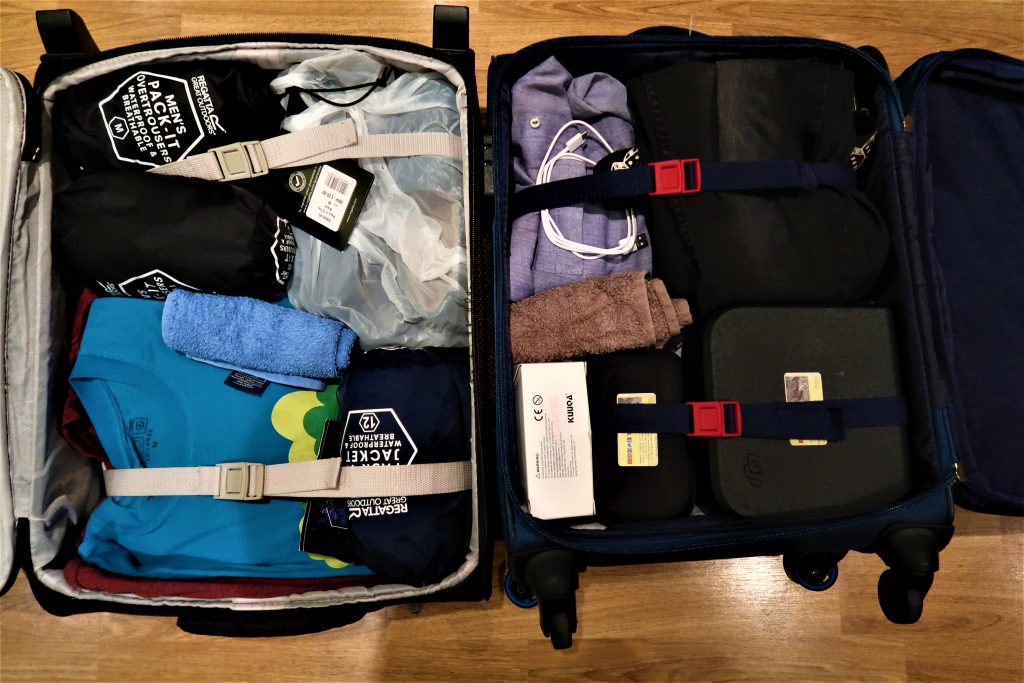
Overpacking
Packing is one of the most stressful parts of travel. There is the fear of overpacking or under packing. So, getting the balance right is crucial.
Overpacking can lead to extra baggage fees and waiting at crowded airports for your checked in bag to be returned at the baggage carousel. This can further delay your travel plans too.
While on the other hand, not packing the essentials for the trip depending on the climate, will leave you feeling uncomfortable and ill-prepared.
We’ve been there, we have packed too many clothes and accessories and we don’t even use half of it.
It didn’t take us long to realise that what we are packing isn’t necessary.
We have since started setting versatile outfits for each day. We’ll mix and match different outfits, to utilise the clothing for different days, this way, we can pack less clothes, while having a different style of outfit each day.
A packing checklist is a very useful tool in packing all the essentials, from gadgets and accessories, toiletries, etc.
Do you need a packing checklist ready for your next trip? We have you covered, with our free packing checklist, that covers everything from packing for a weekend trip, hiking trip, to packing for a carry-on bag only, etc.
You can get your hands on your FREE copy here.
Not booking activities and attractions in advance:
This happens frequently. Don’t be that person who misses out because you didn’t book your tickets in advance.
Many popular tourist attractions sell their tickets out within a matter of hours or days, once released.
To avoid wasting your all-important time in queues trying to get entry to your chosen attraction or missing out completely. Book your tickets online in advance.
If you research, plan and create your itinerary, book attractions in advance, you’ll stay organised and will have a better planned trip, without any disappointments.
We will either book our tickets via the direct website, or with Get Your Guide and Viator.
Researching local scams
Scams can lead to unnecessary stress, financial loss and have an emotional impact on you.
And what makes most travellers vulnerable to scams, is being unfamiliar with the local customs and practices.
As an example, it isn’t uncommon for tuk-tuks in Sri Lanka to charge you more for a ride to your destination, but some drivers will try and drop you to a jewellery shop, so they can get a commission on any jewellery you buy.
And we have heard some scary stories, of tourists being locked in the jewellery shop, frightened. Eventually they were let out, without purchasing anything.
To avoid scams that could leave you out of pocket or stressed, you should do some research before you travel.
Visit trusted websites, experienced travellers like us, are a wealth of knowledge and we love to share tips to help you avoid any travel mistakes, help you find the best deals and make the most of your limited travel time.
Facebook groups are a great place to ask other travellers about potential scams to avoid in a destination. You’ll get plenty of responses, as we are always wanting to help out.
You can check out our destination guides to help you plan your trip and avoid any common mistakes.
You can also join us on our Facebook group, where you can ask questions about your upcoming trip. It is a safe place and no question is ever silly.
You can message us on our social media channels, alternatively you can email us and we will be happy to help you.
Short layovers
A short layover of anything less than 2 hours, could result in rushing to get to your connecting flight and in some cases missed flights.
On our last trip to Sri Lanka, we were flying with Emirates with a layover in Dubai.
We booked our tickets with a layover of 1 hour 45 minutes. While we did make it to our connecting flight, it was a case of rushing through the airport, through security and to our gate. We had just enough time to make a bathroom stop before getting to our gate to board the next flight.
But the risk of missing our flight was always on the back of our mind. Especially if our flight from Colombo was delayed.
Rather than having to rush to your connecting flight, choosing a longer layover, will allow you to have a refreshing break, stretch the legs and you’ll have a reduced risk of missing the flight and the added stress.
The ideal layover time is between 2 and 4 hours. Anything longer and it will become tiring and anything less will result in a rush to make it to your connecting flight.
Pro tip: While a long layover is tiring, if you do book a layover of 8-24 hours, you could take advantage of this. You could check into a hotel and rest, or add an additional stop on your itinerary and visit another destination. Plus, these airline tickets are normally cheaper.
Travel insurance
There is a common misconception that travel insurance isn’t necessary and it is an extra cost that isn’t required. Especially since nothing could possibly go wrong!
But this is actually incorrect. Anything could go wrong, from losing your luggage, to needing medical treatment while you’re away.
Travel insurance is actually way more than this. Insurance will cover you for most eventualities, including cancellation of your holiday, lost luggage, damaged gadgets and more.
On one occasion Shams dropped her mobile phone while travelling. Of course, the phone was damaged, so we claimed for the damage with our travel insurance.
We were paid out and Shams purchased a new phone.
Had we not purchased travel insurance, we would have had to pay for a new phone from our own pocket.
You can pick up travel insurance for a reasonable monthly or yearly fee and it is a worthwhile investment.
Do you want to find out more about why it is essential to get travel insurance? Then check out our detailed guide on why you need travel insurance.
Common travel mistakes to avoid that are often overlooked
There are some common travel mistakes that are often overlooked and could have been avoided.
Such as:
Running out of battery
One of the worst things that could happen while you’re travelling, is your phone or gadgets run out of battery.
This can cause some really big challenges, such as navigating a new city without maps, losing touch with family or friends and losing out of taking precious memories on your phone or camera.
Not only could this put your safety at risk, but could spoil your trip.
We can’t travel without a portable battery bank and we have quite a few of them in our pockets or bags.
Battery banks are real life savers. You can charge your devices while on the go and you no longer need to fear you’ll ever run out of juice.
At the end of the day, plug all devices including the battery bank to charge ready for the next day.
Try to do everything in a short space of time
We have been guilty of trying to pack so much into such a short few days, but this only leads to burnout and even missed experiences.
Don’t pack too much into your itinerary. Organise your itinerary and prioritise the activities that aligns with your interests, while including some rest and downtime.
We know it is hard, but you’ll far more enjoy the trip than feel rushed, tired and burnt out.
Pro tip: Do detailed research and plan your trip, so you can stay organised, less stressed and you won’t feel like you need another holiday to get over your last one.
Not informing the bank about your trip
Who informs their bank about their intended trip? Have you ever had your payment stopped while travelling because you didn’t notify your bank of your travels?
It could happen. You could be making that all important transaction, when suddenly your told payment has been declined. You then need to call your bank to confirm you are overseas and that it is you that’s making that transaction.
Instead of delaying your trip with an additional inconvenience, contact your bank before you travel, so your card isn’t blocked for suspicious activities.
AND always bring back up payments in the event that your card is blocked and you can’t call your bank.
Pro tip: ever considered a travel card instead? We use and love Revolut. It is super easy and with multiple currencies, it allows you to continue spending on holiday without any hassle.
Revolut, is easy to set up and you can have a debit card, or attach a card to your apple or android wallet and you can spend as you would back home. All you have to do, is add funds in your local currency and then convert this to the currencies in the country you’re travelling too.
As an example: if we are planning a trip to Europe. We would set a budget and then add some funds from our bank account into our revolut account in GBP. We would then move (convert) those GBP into Euros. We can spend that money without having to worry about notifying the bank, or incurring international conversion rates and fees.
This saves us money, time and stress.
Running out of funds
If you don’t set a realistic budget, you could run into unexpected cost and budget problems.
The one thing you don’t want to happen is spend all your hard-earned cash on an expensive trip, which didn’t need to be expensive had you have set a realistic budget in the first place.
So how do you avoid spending more money than you should?
Firstly, do some research on the cost of food, accommodation and activities in the location.
Then set a daily budget and track your expenses. Can you find ways to cut back, for example stay in cheap hostels, eat at local cafes and restaurants rather than the expensive tourist hot spots, and visit all the free activities and must-see spots in your destination.
There are plenty of ways that you really could cut that budget and spend less. We have a detailed guide on how to set a budget and simple tips on how to make savings while you travel.
And to save you time, we have also created a budget tracker, to help you stay on a budget and save you money.
Making smart decisions, could save you money.
Not having an emergency travel fund
While in theory, once you have set a realistic budget, you shouldn’t need an emergency fund. But what if something did happen, such as needing medical treatment or flight gets cancelled and you need alternative transport, maybe some of your money was stolen, etc.
Without the additional financial backup, you could be left with calling family members to help you out, or spending more money that you hadn’t expected.
This is why setting an emergency fund will help you overcome any unplanned expenses.
We would normally set a 15-20% of our budget as an emergency fund.
For example: After researching a destination, we set a realistic budget of $1,000.00. 15-20% of this is $150.00 – $200.00 is our emergency fund. So, our total budget including emergency fund is $1,150.00 – $1,200.00.
This gives us a buffer in case of an emergency.

Not checking your passport and important documents
This is more common that you might think.
Most passports have a 10-year expiry, which means you renew the passport and then you can forget about it for about 9 and a half years. But many of us forget about the expiry date altogether. I nearly did this once.
We were planning a trip to Sri Lanka and luckily, we were only in the planning stage, when suddenly after about a month, it dawned on me that I didn’t know when my passport was due to expire.
I quickly checked and yes, I had about 6 months left on my passport and I was planning to travel within those 6 months.
Now most countries, won’t accept you travelling if you have 6 months left on the passport.
So, I quickly applied online to renew the passport and within about 14 days, I received my brand-new passport and I was able to book our travels.
To avoid last-minute stresses, always check expiry dates in advance, check all your important documents are valid and make copies.
You could set a reminder, or note of when your expiry dates for your passport and any other important documents and apply in advance.
Expecting everyone to speak English
Thats right not everyone can speak English and we shouldn’t expect them too either.
While this does make travelling to non-English speaking countries more challenging, due to the language barriers, communication difficulties and cultural misunderstandings. We shouldn’t expect everyone to speak English either.
Learning a few key phrases in the native language, will go much further than not making the effort.
Try learning a few important phrases such as hello, thank you, where is…? How much is….? Etc.
I have learnt a few words in Sinhala, which is one of the languages spoken in Sri Lanka. This impresses many of the locals and in many cases shocks them.
But this only helps to build a rapport with the locals and will help make the trip easier.
If there is still some difficulty with communication, then use language apps. We use Google Translate if the need arises.
Eating and staying in the tourist areas
Tourist areas are notorious for over inflated costs and in many cases, you’re not actually experiencing the authentic cuisine, or the food and accommodation is mediocre.
Venture off the beaten path, as costs will significantly drop and you’ll actually experience the authentic lifestyle and culture.
I would much prefer to stay in Shams family home than in a hotel when staying in Sri Lanka. I love that I can speak to the locals in broken Sinhala and it definitely feels more authentic.
Plus staying with family is far cheaper than a hotel.
If you’re unsure of where to eat in an unfamiliar destination, then ask the locals for recommendations on where they would actually eat and spend their money.
Another good sign is a busy cafe or restaurant. If it is busy, you know the food is going to be good.
If you venture off the beaten path, you could find a great hidden gem and save money along the way.

Underestimating jet lag
Long distance travel can really take it out on you, but flying across different time zones is the most tiring.
As much as you can try and sleep on the plane or in the airport, it’s not the same as actually getting a good night’s sleep in a comfortable bed.
So how do you overcome jet lag quickly without it interrupting your tight schedule?
We will plan our itinerary around a rest day, as soon as we arrive. This will include taking short naps, resting and recuperating from the long flight and adjusting to the new time zone.
Staying hydrated is key during a long flight and to combat jet lag, drink plenty of water during the flight and once you land.
By gradually adjusting your sleep schedule and pattern to the new time zone before you leave, could help with reducing the effects of jet lag, although this isn’t our favoured method, but one many do adopt.
Once well rested, you should be feeling more refreshed and ready to enjoy the rest of your trip.
Conclusion
Travelling is one of the most rewarding experiences, but it’s easy to run into a few hiccups from time to time.
The best way to prevent this from happening is by researching and preparing for the common travel mistakes and ways to avoid them.
If you have made these mistakes before, such as overpacking, neglecting travel insurance, or failing to do adequate research, then you should take action to avoid these common travel mistakes.
If you don’t, you could find yourself more stressed, less organised and spending more money than necessary. Now we don’t want this to happen.
So, think about packing wisely to minimise over packing and the additional costs of excess baggage. Check your documents are all in order, such as passports in date, visa and any other documents.
Protect yourself against unexpected events by taking out travel insurance and finally stay flexible and keep a balanced itinerary, that way you won’t burn out while on the road.
By following these simple tips, you’ll overcome the common travel mistakes to avoid, will have a more defined plan, less stressed and increase your enjoyment of every memory made.
We’d love to hear from you! Have you encountered any of these mistakes, or do you have tips to share? Leave a comment below.
Continue your travel planning, with these useful posts:
- Best travel planning tools and apps
- How to travel more around your 9-5
- How to plan a trip effectively
- Essential travel gear
- Free virtual tours to feed your wanderlust
- How to stay safe while travelling
- Best travel backpacks to purchase
- Best travel podcasts to listen
- Inspirational travel quotes to feed your wanderlust
- How to stay fit while travelling


