Have you seen the London Underground map recently? Yes, it can be very confusing at first glance, wondering how to use the London Underground without getting completely lost.
You won’t be the first.
London’s Underground system is famous but can feel like a maze with all those different colours, going in a different direction. And what can make it worse is, when you’re new to London, tired, jet-lagged or just trying to get from Heathrow to your hotel without taking the wrong turn.
We’ve lived in London for a few years, and since moving away, we still regularly visit and use the Tube frequently. It’s affordable and the quickest way to get around London.
We are going to use our experience and knowledge to provide you with simple steps to riding the London Underground confidently, without getting lost or memorising every possible line.
It won’t be long before you’ll be travelling around London like a local.
This post may contain affiliate links. Meaning that if you purchase through them, we may earn a small commission at no extra cost to you. This helps support our website and allows us to continue providing valuable content. We only recommend products and services we personally use and trust. Read our full disclaimer here.
What is the London Underground?
The London Underground or known locally as the Tube, is London’s oldest metro system in the world.
It opened in 1863 with the initial section running between Paddington and Farringdon. Initially steam powered, which meant the tunnels were smokey and unpleasant, until the lines became electrified.
It’s now grown to 11 different lines and over 270 stations, with most of the stations and tracks running beneath the city of London.
What makes the Tube so different to other networks around the world, is how interconnected it is; it’s like a spider web of routes.
That’s why at first glance it looks so confusing, but surprisingly one of the most efficient ways to get around.
What makes it ideal for tourists is not just the novelty of travelling via Tube, but that it’s the fastest and most reliable option.
Let’s face it, London’s roads are busy and congested, which makes travelling via bus or taxi unpredictable.
Nearly all of London’s tourist attractions are directly connected by the Tube lines, making it almost impossible to avoid it.
How to use the London Underground
The London Underground really isn’t challenging, especially once you know the basics of how it flows; it will become easier.
Enter the station
You’ll firstly need to find the station entrance. In central London, the station can have multiple entrances, while some stations on the outskirts will only have one entrance.
Whether the station has one entrance or multiple, all will have ticket barriers that you’ll need to pass through.
Touch in at the barrier
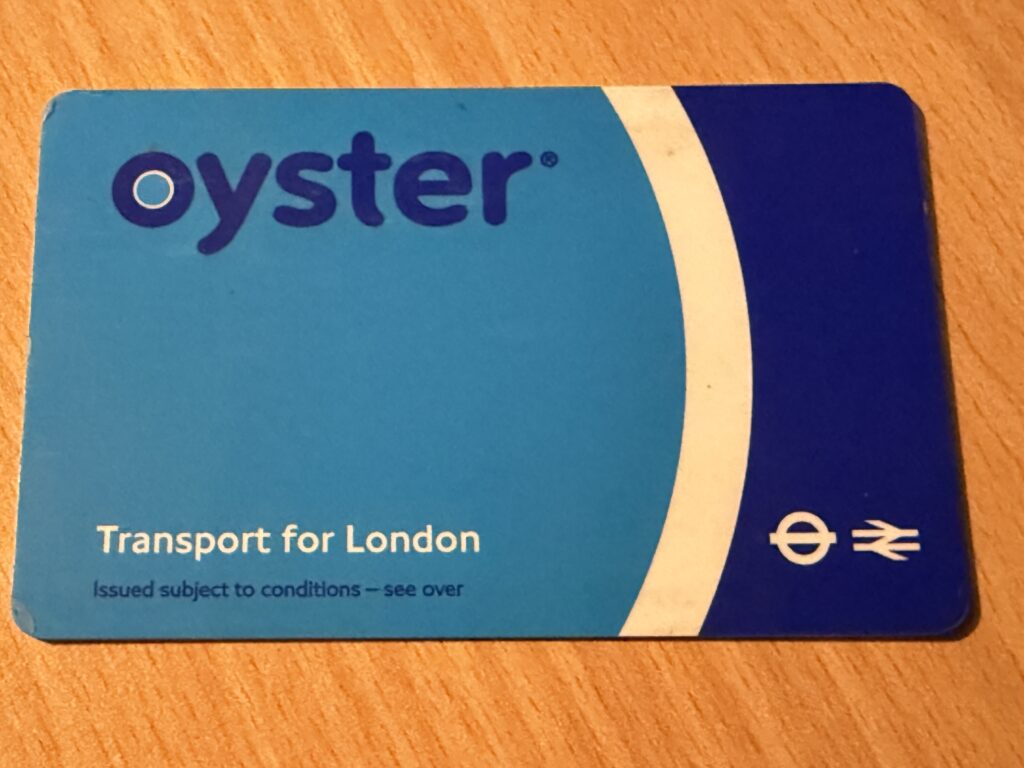
To enter through the ticket barriers, you’ll either need a travel card, Oyster Card, or contactless payment.
If you have either a travel card, or a contactless payment card, just tap the card on the yellow reader and the barriers will open.
If you are travelling with an Oyster Card, you’ll need to have enough money already credited to the card, to allow you through the barriers. If not, just top up the card from the machines either on the left or right of the barrier and follow the prompts on screen.
Once you have sufficient funds on the Oyster, then tap the card at the barrier on the yellow reader and the gates will open.
If you do have trouble with the gates opening, try it slowly again, and if that fails, then speak to the barrier attendant, who will assist you.
Follow the signs to the line
Once you are through the barriers, you’ll need to follow the signs for the relevant Tube line, which is defined by the colour and the name of the line. But you’ll also need to look out for signs to tell you which direction to travel in.
Every line will go in two directions; this will be based on the final side of each end of the line.
So, for example, the Jubilee line will either go northbound to Stanmore, or southbound to Stratford.
But some lines such as the Central Line will either go eastbound to Epping or westbound for Ealing Broadway or West Ruislip.
Understanding which direction, you need to travel in and following the name of the last station on the line, rather than the station you’re actually going to, will help you determine which platform, and which train you’ll need to catch.
Make your way to the platform
Once you have followed the signs, you’ll reach the platform. Some platforms are deep underground, and the only way to reach them is via an escalator or lift.
At the platform, you’ll see overhead boards, showing the next train, followed by the next 2-5 trains and how long the wait time.
Normally you’ll only need to wait a couple of minutes, but no longer than 15 minutes.
When the train arrives at the platform, look out for the front of the train, to make sure it is the right train that you need to get onto.
Some lines and platforms will have a crossover, so boarding the right train will take you to your destination.
Listen out for announcements
Announcements will tell you everything you need to know, so listen to them.
They’ll announce:
- When the next train will arrive
- Partial closures
- Line delays
- Platform changes
Board the train
The doors will automatically open; you should stand to the side and let any passengers off the train before entering. You’ll have enough time to board, as the driver can see along the platform, and there will be an announcement when the doors are closing.
If there isn’t enough room on the train because it is packed and it’s announced that the doors are closing, step away and let the train depart.
Another train will be along shortly; that’s likely to be less crowded.
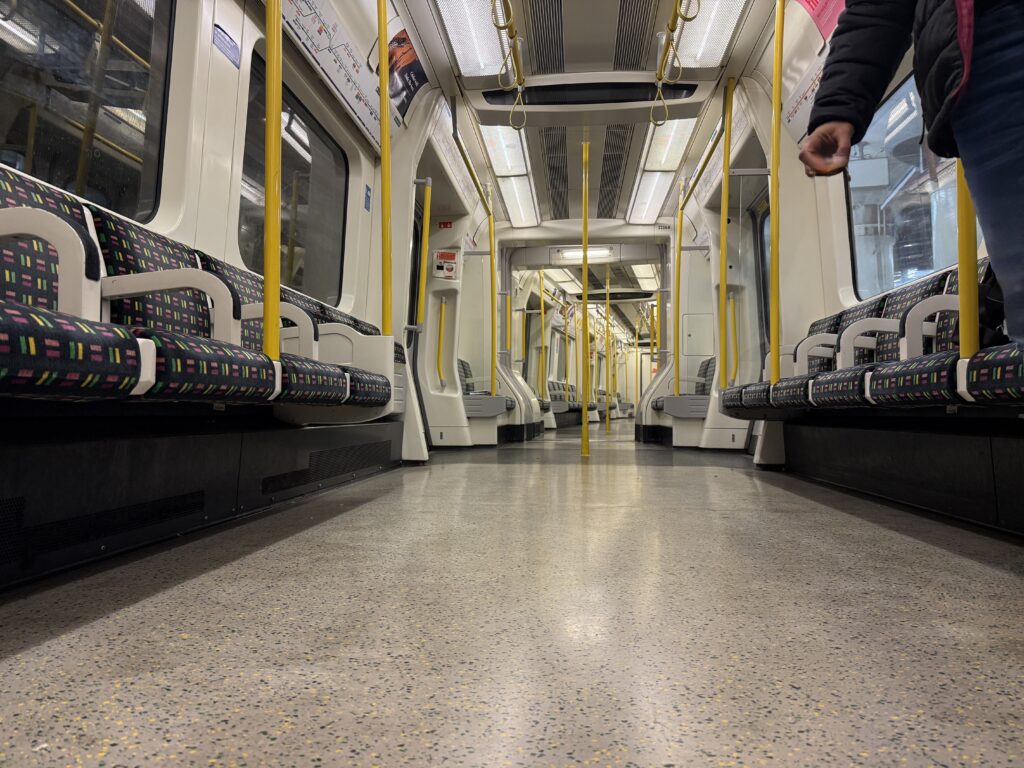
Once you’re onboard the train, you can find a seat or move down the carriage to allow for more space.
Inside the train, look out for your stop by following the route with:
- Digital displays showing the next stop
- Maps above the windows
- Audio announcements of the next station
Once you have reached your stop, exit the train once the doors have been released.
The doors will open automatically.
Follow the signs to the exit
The platform will have signs for “way out” or to connect to a different Tube Line. Follow the signs until you reach the barriers.
At the barriers, tap your payment card and the barriers will open.
Make sure you are tapping the same card that you entered on. If you don’t, you will be charged with the daily cap.
The stations within central London are likely to have multiple exits. A sign will detail the road name or the landmark.
Pick the closest exit to your destination and follow the signs.
And you’ve made it through the London Underground with ease.
Understanding the Tube map
The spiders’ web of lines and different zones look complicated, right?
Once you know how to read the coloured lines and zones, it really isn’t complicated at all.
Tube Zones
London is divided into different zones, with zone one for central London, and then it fans out to zone two, three, four, until you reach zone nine which is on the very outskirts of London.
Now these zones affect how much you pay.
If this is your first time in London, then you’ll likely focus your time in zones one and two. If you are arriving via London Heathrow, then you’ll be in zone six.
You don’t actually need to know all of the zones, and which zone you’ll be travelling in, you just need to know that they are there.
Tube lines, colours and symbols
There are 11 Tube lines, all colour coded to help tourists and locals travel around London with ease.
As an example, the Jubilee Line is grey or silver in colour and runs from Stanmore, through Westminster, Waterloo, London Bridge out to Stratford.
Other line colours and names will determine their route.
You’ll find the name of the line, colour and route everywhere. On maps, signs, and even on platform walls, which makes it super helpful to navigate.
You’ll also see symbols such as:
- White circles or dashes – stations where trains stop
- Black or blue circles – interchanging stations, where you can change between different Tube lines and for National Rail
- National Rail symbols – this connects the London Underground with the rail network. National Rail connects London with other towns and cities around Great Britain and Europe.
- Plane symbols – airport connections
Direction of travel
This is probably the most confusing part of travelling via the London Underground, especially for first time travellers.
The direction of travel is not necessarily northbound or southbound; you may travel westbound or eastbound.
Also remember that the destination you need will be along the line that takes you to the last station.
So, for example, if I entered London Bridge Underground Station and I want to get to Westminster. I’d need to take the Jubilee Line, towards Stanmore and exit at Westminster.
To plan your route, you need to find the line you need, follow the coloured route, and look at the final stop in the direction you need.
Once you have the endpoint, follow the signs for that destination inside the station.
After your first time, you’ll be hopping on and off the Tube like a pro.
How to pay for the Tube
Paying to travel via the Tube is very simple and very affordable.
Here are some of the payment options available:
Oyster card
An oyster card is a blue and white card, in which you can obtain from any Tube station in London.
It’s a smart card that allows you to top it up with credit, so you can automatically pay for all your public transport needs in London, including the London Underground.
It’s perfect if you’re spending more than a few days in London and don’t want to use a bank card.
The fares are automatically calculated and deducted from the credit on the card. Should you reach the daily cap, then you’ll not be charged anything more for the remaining public transport you take in that day.
Contactless payment card
Now a contactless payment card could be a bank debit or credit card, phone with Apple or Google pay, or your smart watch.
This works similarly to the Oyster card. You just tap and the fare will automatically deduct from the payment card and once you reach the cap, you won’t pay any more.
You don’t need to top up; and there are no card fees other than any currency exchange rates that may apply, if not using a local card.
It is just a case of tap and go.
This is the best option for tourists, as it’s the easiest and cheapest way to travel.
Travel cards
A travel card is a paper ticket that you purchase for 1 day and up to 7 days; you don’t need to top the ticket up, as the value of the ticket will allow you to travel for the duration you have purchased.
It might sound like a convenient option, but they can be expensive, especially if you’re only travelling via Tube a couple of times a day. If you’re going to use it a lot, then a travel card might be an affordable option.
In our experience we haven’t used a travel card for more than 10 years now, if not longer. Therefore, most travelers won’t need a travel card.
Price caps
The London Underground has a price cap for daily and weekly use. If you exceed the cap, you won’t pay anything more per day or in the week.
Daily caps will vary depending on the zones you travel through and the time of day.
When you use the Oyster or contactless card payment, providing you have sufficient funds, the system will automatically calculate the fare for you, so you don’t need to worry about it.
Peak and off-peak travel
Travel during peak times from 6:30-9:30am and 4-7pm isn’t ideal.
Not only are ticket prices more expensive, but the small Tube trains are congested and crowded.
I can remember commuting to London for a short time, not only was the platform busy, but trying to pack into a carriage like sardines isn’t ideal. And even if you decide to wait for the next train, it was the same.
Plan your itinerary around rush hour, as your wallet will thank you for it. And so will your stress levels.
Staying safe on the London Underground
The London Underground is one of the safest systems in the world, but that said, you can never say something is 100% safe, as things can happen. And to help stay safe while visiting London, then there are some simple rules we would recommend.
Platform etiquette
To keep things moving on the Tube and prevent congestion or getting hurt, you should always:
- Stand behind the yellow line – it is there for a reason. It will keep you safe when the train approaches the platform.
- Always let passengers off the train first – it makes sense, to allow passengers off first, to create space for you to board the train.
- Keep your backpack in front of you – this will prevent any potential pickpockets
Late night safety
Although the network is safe to travel on at night, there are some things you should consider:
- Always sit or stand in well-lit areas and within close proximity to other travellers. You may favour sitting or standing close to other females or families. It can make you feel safer.
- Sit in a carriage with people, for your own safety, again you may wish to stay close to other females or families.
- Avoid falling asleep, as you might miss your stop or end in the depot.
While there are TFL (Transport for London) Staff and CCTV cameras throughout the station and train, it doesn’t stop you from taking the relevant precautions to stay alert and safe.
Conclusion
Now that you know exactly how to use the London Underground, you can whiz around with ease.
You can pick the right lines to get you from A to B, travel in the correct direction and choose the right payment option that’s going to keep your London travel budget to a minimum.
You’ll now be able to explore more, see more, and actually enjoy the city without worrying about transportation options.
You’ve got the Tube handled, let’s make the rest of your London adventures effortless too.
Continue your travel planning, with these useful posts:
- How to get around London like a local
- Where to stay in London
- Essential UK travel tips
- Winter Wanderland Christmas market in London
- Best London parks
- Best day trips from London
- Best neighbourhoods in London to visit
- Best souvenirs to buy from London
- A day trip to Eastbourne from London
- A day trip to Brighton from London