Have you found yourself searching for hours trying to find out what to pack for a safari? Chances are you’re feeling a mix of excitement and nervous.
We felt exactly that on our first safari in Sri Lanka. It’s the not knowing what conditions we were facing to understand what should go into our backpacks.
The one thing we wish we’d packed, was a scarf or face mask to cover the nose and face as there is a lot of dust.
One of our memorable experiences was navigating the jungle, bouncing along the dry dirt trails, looking for wildlife and the elusive leopard, all the while the dust was just going into to our lungs.
It taught us that research and packing smartly, is essential. Especially if we want to make the most of every moment in the wild.
And that is exactly why we have created this guide, to prevent you from making the same rookie mistakes we made, but instead, pack confidently, knowing you have all the essentials you’ll need.
Whether you are heading to one of Sri Lanka’s National Parks to spot elephants in the wild, or one of Africa’s reserves to discover the big five wild animals.
We’re speaking directly to you, curious, nature-loving explorers, who want to feel prepared, not panicked, when adventure calls.
Let’s make sure you’re not just packed but prepared for the adventure of a lifetime.
This post may contain affiliate links. Meaning that if you purchase through them, we may earn a small commission at no extra cost to you. This helps support our website and allows us to continue providing valuable content. We only recommend products and services we personally use and trust. Read our full disclaimer here.
What to wear on safari and why it matters?
What you wear matters on a safari; you don’t want to scare the animals and wildlife or stand out. You want to blend in.
But you also need clothing that will keep you warm, on chilly mornings or keep you cool during the midday heat.
We’d recommend these practical outfits to wear.
Clothing
You’ll want to wear comfortable clothing that is lightweight and breathable. We like to wear fitness clothing as it has the perfect material for all types of weather.
Colours should be neutral, such as khaki, and light greens.
You don’t want to be wearing bright red or blue, as you’ll stand out and, in some cases, could startle the animals.
Bring some layers, temperatures fluctuate at different times in the day. Early mornings and late evenings get cooler, so you’ll want layers to keep you warmer, while during the midday it might be hot, so wear breathable moisture wick outfits.
In some regions, you might encounter biting insects, such as mosquitoes, etc. Wearing long sleeve shirts and trousers, will help to prevent insect bites.
Footwear
Closed shoed footwear is a good idea; to protect your feet, we’d recommend trainers or lightweight boots.
Accessories
Be prepared whatever the weather, pack a waterproof jacket and trousers, in case it rains and sun protection for the hot conditions.
We don’t leave without waterproof clothing, sun cream, a sun hat and sunglasses.
A scarf/buff/mask is a MUST to cover your nose and mouth, to stop you from inhaling all the dirty dust.
Essential gear – what you shouldn’t go on safari without
This is a once in a lifetime experience and you don’t want to miss out, just because you didn’t pack these essentials that you can’t go without.
Backpack
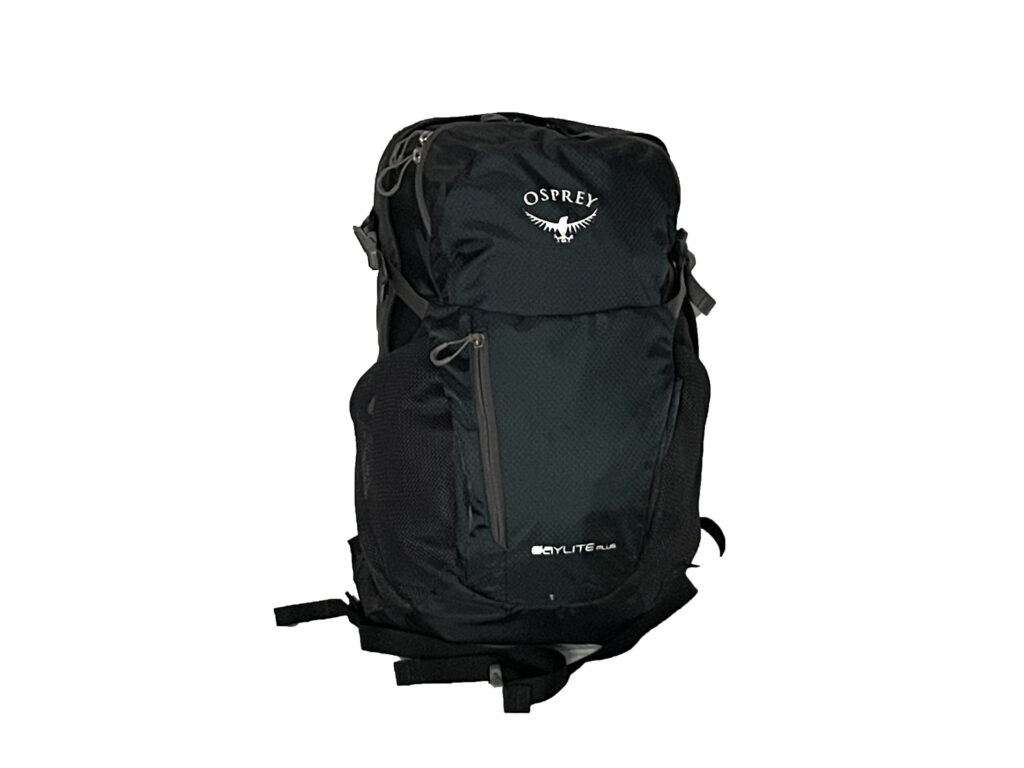
A day backpack is a must; this is where you’ll store all the essential gear, including plenty of water to keep you hydrated.
Water
One of the mistakes tourists make, is not drinking enough water and staying hydrated. This is so important when you’re in the jungle in the middle of nowhere.
If you get sick from dehydration, not only will you be spoiling it for the group, but also yourself for not drinking enough.
Pack plenty of water and drink, drink and drink.
Binoculars
On our safari in Yala National Park, this is another item we regretfully didn’t take with us.
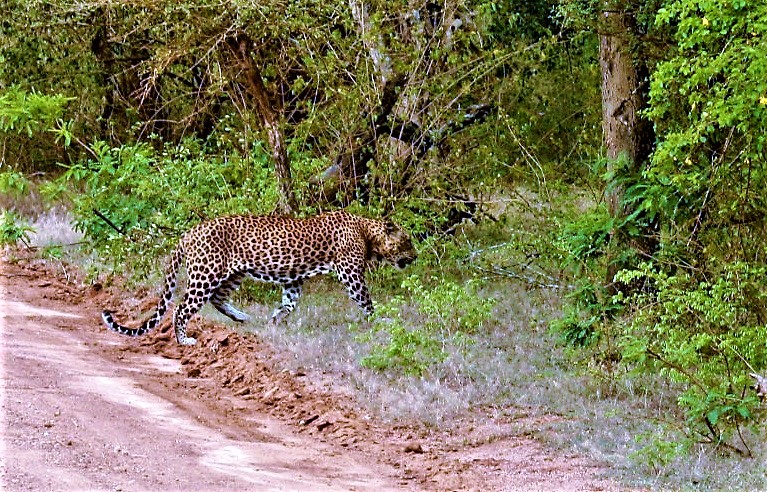
We were looking high and low for the elusive leopard, but couldn’t spot it, until it walked right out in front of us.
Leopards are often lazing in distant trees and the only way you’ll spot one, is with binoculars and a very long camera lens (and they are expensive).
If you haven’t already borrowed or purchased binoculars, get them before you go. You can pick up good quality affordable ones in your local camera shop or gadgets shop.
Don’t regret it like we did.
A good camera and lens
The latest mobile phone cameras have a high quality of capability to take photos and videos. But we don’t want to burst your bubble, but a good camera with a good lens coverage will be an advantage.
The quality on your mobile phone, won’t do it as good a justice as a good camera.
So, invest in a good camera and lens that can take images and videos of wildlife in the distance.
We used our Canon D500, which is a very old camera now, and a long lens and some of our safari pictures are still to a good standard.
Gear accessories
A travel adapter will help to charge up any devices as and when required.
Without a travel adapter, you’ll run into charging problems if the plug type is different.
A torch or head torch will come in handy when it gets dark.
A safari journey or wildlife checklist is a fantastic idea if you want to keep a souvenir of your travel journey.
And finally, a ziplock or dry bag will keep your gadgets protected from the dust and rain.
Staying healthy and safe on safari
Keep yourself protected with these essential health and safety safari items.
Insect repellent
We mentioned earlier about covering the arms and legs to protect yourself from insects such as mosquitoes from biting. But insect repellent will also help to prevent you from being bitten.
Normally I am bitten excessively in Sri Lanka, and I don’t need to be on a safari to get bitten. But mosquito and insect repellent has helped significantly reduce the bites.
Regardless of whether there is known insects or not on safari, still protect yourself, especially with known deadly infections such as malaria and dengue fever.
Basic first aid kit
We never leave home without our basic first aid kit. It has everything we need to get us back on the road as quickly as possible.
We have plasters, medication, antiseptic wipes etc in our travel first aid kit.
You can check what is in our first aid kit here.
Sun protection
Now we briefly mentioned about sun protection earlier, but this is so important if you are visiting somewhere that sees extreme heat.
Have you ever been badly sunburnt before? If not, I can tell you, it is very painful and uncomfortable.
It is now something I always pack, even if I know it will be a cloudy day, as you can still burn.
You should have with you, sun cream, sun hat and sunglasses.
There is no escaping the sun on some safaris.
Toiletries and personal items
Need to feel clean and fresh in the wild? Then you’ll need these
Toilet paper
Not every country uses toilet paper. A small roll or packet of toilet paper will make the experience of going a little more comfortable.
If you are out on safari and you need to go, just ask the guide or driver about stopping for the toilet and they will find you a little spot behind a bush or somewhere discrete for you.
DO NOT discard any toilet paper in the wild. Animals will come to investigate what you have left behind. Not a pleasant thought.
Take a small paper bag, or a ziplock bag to discard any toilet paper or sanitary products and when you return to your accommodation, place them in the bins in the bathroom.
Menstrual products
We understand how uncomfortable it can be, when you get your periods, and having them while on safari, will make things a little more uncomfortable, especially without toilet facilities.
But if you do have your periods during the safari, don’t worry, there is no need to stress or feel uncomfortable, it is completely natural.
Just ask to go to the toilet and the guide or driver will take you to a discrete spot for a call of nature.
Just make sure you take all your waste with you and discard it back at your accommodation.
AND don’t flush it down the toilet. Place it in the bins in the bathroom.
Shampoo and soap
Depending on where you’re staying on safari, there may not be shampoo or soap available.
It might be a good idea to pack travel soap and shampoo to keep you feeling fresh and clean, especially after a dusty safari trip.
Optional items to pack
These small things could make a big difference to your safari experience.
Snacks
Depending on the duration, you could be out the whole day. Which is likely to mean no proper meal.
To keep you fueled during the trip, you should pack a small picnic or lunch and snacks.
We stayed in a small homestay near Yala National Park the night before our safari. The following morning, we woke to a full breakfast spread to keep us going, but also what is called a lunch packet.
Consisting of rice and various vegetable and meat curries, tightly packed up ready for lunch.
We stopped for lunch and when we came to eating it, it was still warm.
AND it fueled us ready to spot the shy leopard.
Note pad and pen
Enjoy writing in a journal about your safari experience, then a note pad and pen will help you to keep the memory alive.
Conclusion
Whether you’re venturing into the golden plains of Africa, weaving through the lush jungles of Sri Lanka, or exploring off-the-beaten-track reserves somewhere entirely unique, one truth holds across the board. What you pack for a safari can make or break the experience.
We’ve shared the must haves, from lightweight layers and clothing, neutral tones, sturdy footwear, insect repellent and the best gadgets to increase your chances of spotting and taking pictures of the wildlife you’ll spot along the way.
But for us it is more than just listing the essentials, it’s helping you pack confidently and with purpose.
We’ve lived the dusty trails, and the chilly morning rises in Yala National Park. And we know that packing smart means you’ll be free to truly immerse yourself into the thrill of the wild, without the worry.
Now over to you, where’s your next safari taking you? Drop your destination in the comments and let us know if you’d like a tailored list. Or download our free ultimate packing checklist to make prep even easier.
Continue your travel planning, with these useful posts:
- How to climb Sigiriya Rock
- Common Sri Lanka travel mistakes and how to avoid them
- How to climb Pidurangala Rock
- Best national parks in Sri Lanka
- Best train journeys in Sri Lanka
- 7 Day Sri Lanka itinerary
- 2 Week Sri Lanka itinerary
- 10 Day Sri Lanka itinerary
- Best places to visit in Sri Lanka
- Travel guide to Sri Lanka


