Planning a trip and wondering about how much it will cost to visit the UK before you go? Because let’s face it, the UK isn’t the cheapest destination, and we don’t want you to blow your budget before you’ve even started.
Which is why we have broken it down, so you can get clear and honest numbers, ranges and understand how much you’ll need to budget for your trip.
We have lived in the UK together for nearly 20 years and can understand how easy it is to just overspend and double your daily budget if you’re not careful.
But with some simple hacks, you can visit the UK without spending a fortune.
By the end, you’ll know how much to budget depending on your travel style, where your money goes and how to travel smarter in the UK.
This post may contain affiliate links. Meaning that if you purchase through them, we may earn a small commission at no extra cost to you. This helps support our website and allows us to continue providing valuable content. We only recommend products and services we personally use and trust. Read our full disclaimer here.
What is the estimated cost to visit the UK
When we talk about setting a budget, this isn’t one size that fits all. As you might be a budget traveller looking for the cheapest accommodation, affordable local places to eat and free things to do, while others might be happy to spend more on luxury amenities and experiences.
To set a realistic budget, you need to consider where you stay, how long you’re visiting, what experiences you are looking for, etc.
We’ll break that all down in a moment, but here is an estimated budget for each style, based on a 7-day trip to the UK:
Budget traveller
As a budget traveller you could spend between $1200-$1600 USD in total. This includes cheap flights, hostels and budget hotels, public transport, and simple meals.
That’s around $170.00-$230 per day.
Mid-range traveller
You should expect to spend around $1600-$2500 USD in total. This includes flights, decent hotels, eating out once, maybe twice a day, transport, and paid attractions.
This works out at about $230-$360 per day, per person.
Luxury traveller
A traveller that enjoys luxury experiences could spend anything upwards of $2500+ USD. This includes luxury hotels, meals in high-end restaurants, public transport, tours, shows, and paid experiences.
This is anything from $360+ per day.
Now there are several factors that heavily impact this estimated cost. And there are ways that you can significantly reduce the spending costs.
Choosing the right season really does matter. During the summer, prices can soar along with the heat, while winters are far cheaper and less crowded.
Your accommodation choices, food habits, and transport styles will change your overall budget.
Once you understand the variables, budgeting for the UK is much easier.
Flight costs to visit the UK
The cost of flights is going to depend on where you are arriving from and will take the biggest chunk of your budget.
Estimated flight price based on region
Budget airlines connect the UK with Europe, and you could book a seat for as little as $50, depending on when you book and where you’re coming from.
But with cheap airfares, less perks are included. For example, you can book a seat during off peak season for as little as $50, but you’ll need to pay extra for a cabin bag, priority seating, etc, etc.
So, while the overall price looks like a good deal, when you add the extra’s on top it is no longer cheap.
Flights from the US and Canada can range between $600-$1100, from Australia and New Zealand is between $1000-$2000, and Asia is between $700-$1300.
Seasonality will play a large role in flight prices, including any hidden airline fees.
For example, summer (June to August) is the most expensive period to travel, with airline prices at the highest, while the shoulder and off season will be cheaper.
We’ve used the following providers to pick up the best flight deals:
- Lastminute.com – they offer flights and package deals with flight + accommodation. We love that you can be flexible with your dates to find a deal that’s within our budget
- Skyscanner – great for finding affordable flights
- British Airways – the UK carrier
- Airlines websites directly, such as Ryanair, American Airlines, Emirates, etc
Accommodation costs
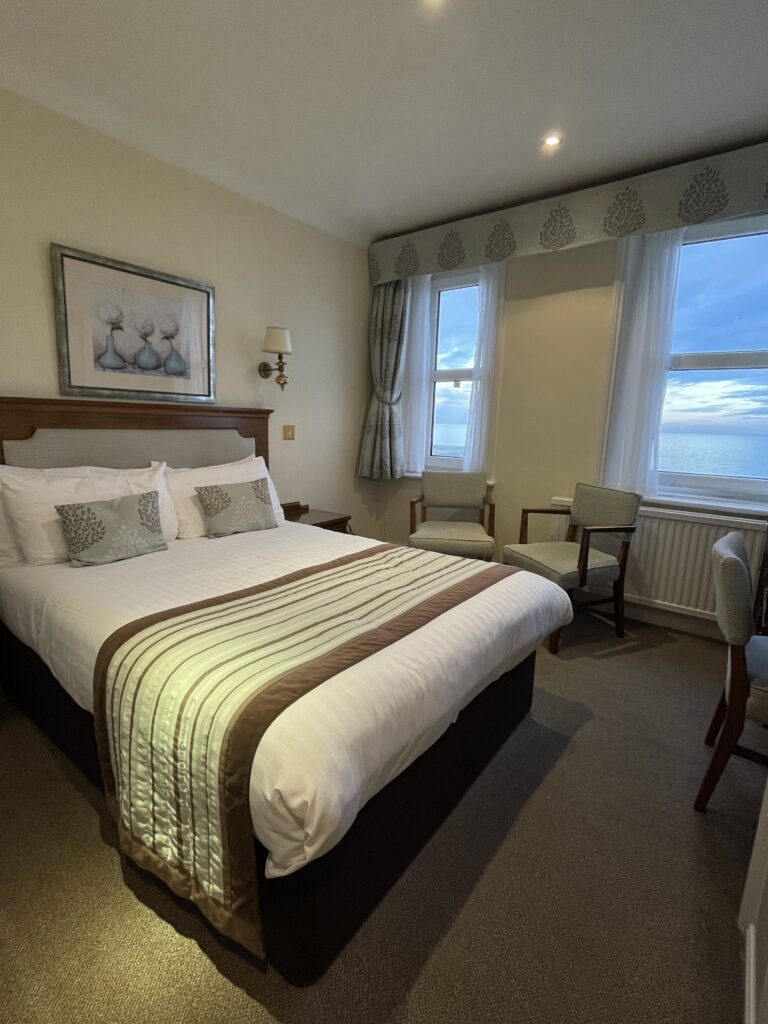
Accommodation costs are the next biggest budget killer, and where you stay matters.
Prices tend to be more expensive around festivals, weekends, and summer months.
Hostels vs hotels in the UK
Hostels are by far the cheapest option, with a dorm room starting at $25 per night.
As a female, you may choose to stay in an all-female dorm, for safety reasons. Although you can book into a mixed dorm, or a private room.
Most rooms come with shared facilities, while some hostels may offer a private room and bathroom. But they are more expensive than a dorm room.
I’ve stayed in a hostel in Australia; it was affordable and a great way as a solo female to meet new like-minded travellers.
Hostel World is the go-to provider for all hostel accommodation options in the UK.
Hotels on the other hand are more expensive depending on the number of star ratings they have. But they are far more private and comfortable.
Hotels are the ideal solution if you don’t mind spending a bit more money on comfort and privacy.
As a couple, we prefer to stay in mid-range accommodation options. It allows us to have more privacy while having a comfortable experience.
Our go to mid-range hotel provider is either Premier Inn or Travelodge. Both are affordable; they offer basic private rooms and bathroom facilities.
If neither of these options are available, we’ll check out booking.com for other options.
By making smart accommodation choices, you can cut your accommodation costs, which will bring your overall budget down.
Food and drinks costs in the UK
Food is a daily expense that can add up if you don’t monitor your spending, however you can control it more.
A meal in the UK, depending on where you go, can cost as little as $10 or less. Think about small bakeries and cafes, even the local supermarkets such as Tesco, Asda, Morrisons, Lidl etc, offer meal deals for less than $10.
While at the other end of the scale, a high-end restaurant or a celebrity chef restaurant could be upwards of $50+ per meal, plus drinks on top.
Coffee or tea sell for around $3-$5, and a pint costs around $6-$8.
Tips to save money on food
If you are on a very tight budget, consider eating out in a small cafe or bakery once a day.
As grocery shopping is cheaper than eating out, utilise this for breakfast and lunch.
We will normally buy pots of porridge that require boiled water for breakfast and then the meal deals in supermarkets for lunch.
It keeps us in budget, which allows us to spend more on a meal, an experience or even a more expensive hotel.
Avoid eating near tourist attractions as prices are higher and often lower quality.
Do plenty of research on recommended places to eat before you go, so you can plan where to eat that’s within your budget.
By making smart food choices, this can significantly lower the cost of visiting the UK without hurting your experience.
Transportation costs to visit the UK
Getting around the UK will play a major role in your itinerary planning, especially if you plan to include multiple cities.
Public transport infrastructure is excellent in the UK, but prices will vary depending on whether you want to travel by train, bus, or car.
Train vs bus vs car
Driving is probably the most convenient option. There are no restrictions because you can drive at any time of day or night; you can go anywhere, including rural areas where public transport doesn’t cover, and its way more comfortable.
But it is the most expensive, as you’ll have to pay for the hire vehicle, plus insurance and then fuel on top.
If you intend to drive in large cities, parking and traffic can be stressful, limited, and expensive.
If you are stopping in large cities, then check out their park and ride service. Parking is affordable normally a couple of pounds for 24 hours for up to 5 passengers and a free bus shuttle to the city center.
We did this on a day trip to Oxford and Canterbury. It cost us about $6 for 2 people for a 24-hour period and the bus was free.
We would recommend that you avoid hiring a vehicle, unless you plan on doing a road trip around the UK.
If you would like to check prices and availability for car hire, then check out Discover Cars.
Trains on the other hand are quick, reliable, and efficient. Yet they are the second most expensive option. Also, you are relying on a timetable, and many small villages only have one train an hour.
Buses are the cheapest option, but again you are relying on a timetable, can take longer than a train and risk getting caught up in traffic.
It’s worth researching train and bus ticket prices for the journey you intend to take, to find the best deal and book in advance, as ticket prices are cheaper. You can check out rates and book train tickets with National Rail and National Express for buses.
Transport costs in London
London is one of the easiest cities to explore either on foot for free, or via affordable public transport options.
The London Underground, or as the locals call it the Tube, is a network of lines that connect with different stops in and around central London, and within the outskirts of the city.
Most tourists will travel around Central London which is within Zones one and two.
And there is a cap, which means after a certain number of journeys in one day, you will be capped at the daily rate, and any additional journeys are free thereafter.
We have written an in-depth guide on how to get around London, which includes transport options and the price cap.
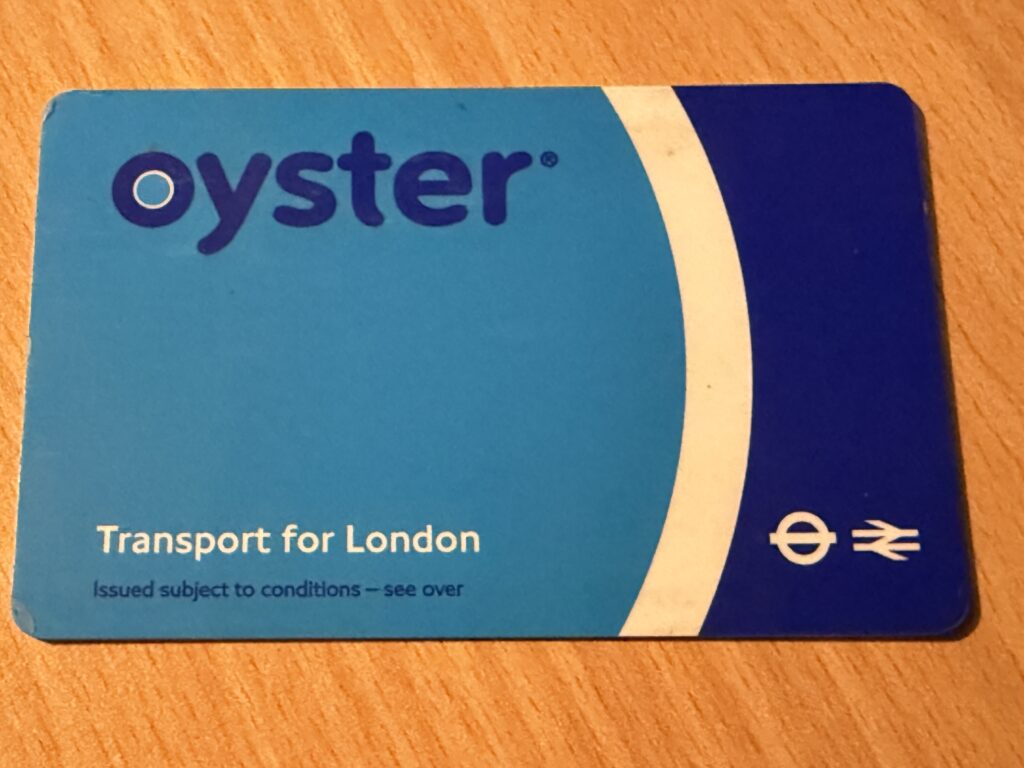
To pay for your journeys, you’ll use either a travel card, Oyster Card or a contactless payment card.
Attractions and experiences in the UK
The UK offers plenty of free attractions, which means you could save a bit of money, and not miss out on the experience.
Many museums, art galleries and parks are free, such as the Natural History Museum, British Museum, Tate Modern, and many more.
This will help to keep costs low.
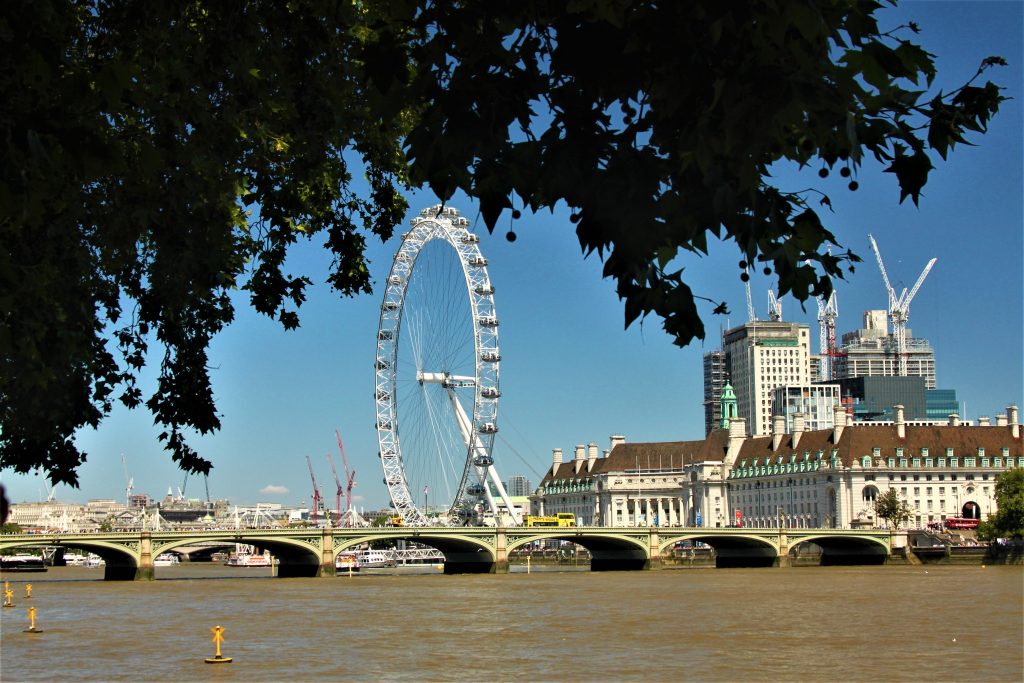
While major attractions such as the London Eye, Tower of London, a West End Show etc, are expensive, with ticket prices per adult starting at around $40.
You can save money by purchasing a sightseeing pass bundle, such as the London Pass, with multi-day passes available. This allows you to visit multiple sites within a certain period, with either free admission, or significant discounts.
These are ideal if you have several tourist spots packed into your itinerary.
London is the most expensive, in smaller cities; prices can significantly drop.
To utilise your budget wisely, you need to prioritse what attractions, sights and experience you must do, and include some free activities too.
Emergency fund
We don’t see this mentioned enough, but an emergency fund is so important when factoring in the cost of visiting the UK.
Unexpected expenses can happen, even though you have a well-planned trip.
You might need some funds for a medical emergency, or lost luggage, last-minute hotel change, and rebooking fees. It is not for a shopping spree or upgrades.
A rule of thumb is normally 10-20% of your overall budget.
So, if your 7-day budget for the UK is $1000. You’ll want to include an emergency or buffer fund at $100-$200.
In our experience, we have never used our emergency fund, but we know it is there, in the event something did happen, then we would have enough funds to cover us.
Not only does an emergency fund set a realistic expectation but also gives you peace of mind while travelling.
Estimated daily cost
So, your daily cost will depend on how you travel, your comfort levels, and how frugal you are with your finances.
It would be very achievable to visit the UK on a budget of $50-$70 per person. That includes accommodation, public transport, food and drink, activities and experiences, and an emergency fund. This estimate excludes flights.
This is what your estimated daily breakdown might look like:
United Kingdom Travel CostsUnderstanding and monitoring your daily spending will help to keep your budget in check and make planning easier and stress free.
Conclusion
It doesn’t have to be expensive to visit the UK. Once you break it down between flights, accommodation, food, transport, attractions and experiences and the emergency fund, you’ll find it much easier to see where the bulk of your money will go.
You’ll then see what a realistic UK travel budget will look like, and adapt ways to cut back, so you don’t overspend.
It’s now just a case of using these estimates to help you map out your own trip and your own budget. Think about what your ideal budget will be, are you leaning towards a budget traveller, or maybe a mid-range and don’t forget to add an emergency fund as a buffer.
By having a well-defined plan, a realistic budget and understanding how much things cost in the UK, you can fine tune your travel style and enjoy more of what the UK offers in adventure.
Continue your travel planning, with these useful posts:
- Essential travel guide to the UK
- Tips for driving in the United Kingdom for the first time
- Best parks in London
- Best places to visit in UK
- Best day trips from London
- Best neighbourhoods to visit in London
- Best souvenirs to bring home from the United Kingdom
- Best time to visit the UK
- Day trip to Eastbourne from London
- Day trip to Brighton from London