If this is your first visit to London, it can feel exciting but scary at the same time. You’re wondering which places are actually worth it, especially on a limited timescale.
You’ll discover the iconic London landmarks that are safe and easy to explore, and how to see the best of the city without feeling rushed or lost in the crowds.
From world-famous sights like Big Ben and Buckingham Palace to lesser-known spots that are worth adding to your London itinerary.
If you want a London experience that feels safe and unforgettable, then you’re in the right place.
This post may contain affiliate links. Meaning that if you purchase through them, we may earn a small commission at no extra cost to you. This helps support our website and allows us to continue providing valuable content. We only recommend products and services we personally use and trust. Read our full disclaimer here.
Iconic London landmarks you can’t miss
London is our favourite city; it has a mix of history, modernism, culture and some very famous landmarks that will feel familiar even before you’ve seen them in real life.
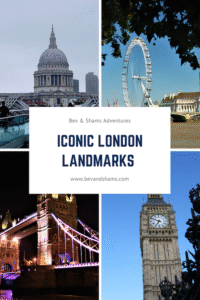
And here are the most iconic London landmarks that bring this city to life.
Big Ben and The Houses of Parliament
Big Ben and the Houses of Parliament are one of those London landmarks that you already feel you know so well, even before you arrive. This is probably because you’ve seen several films and TV programs featuring them.
But one thing that confuses a lot of people is the name.
Although it is famously known as Big Ben, that’s not the tower’s name.
The tower itself is called the Elizabeth Tower and is named after the late Queen Elizabeth II for her Diamond Jubilee in 2012.
Big Ben is actually a huge bell inside the tower.
Right next to it is the Palace of Westminster, which is where the UK government meets.
It’s been the centre of British Politics for centuries and was built over 1000 years ago.
Even if you have no interest in politics, it’s still worth visiting, just to see the incredible architecture.
They sit right on the River Thames and are one of the most photographed spots in London.
If you want to head inside, you can only go on a guided tour, and tickets must be purchased in advance. You’ll need to go through high-level security for obvious reasons.
As this is a very popular tourist destination, it gets very busy during the day, especially mid-morning onwards.
We’d recommend going early in the morning if you can; it will feel calmer, easier to move around, and you’ll get a much better photo without the crowds.
The great thing about Big Ben and the Houses of Parliament is that it’s in a prime location in London, and close to other major sights, including Westminster Abbey, St James Park, the London Eye and even Buckingham Palace.
This would be a great starting point for your London itinerary.


Buckingham Palace
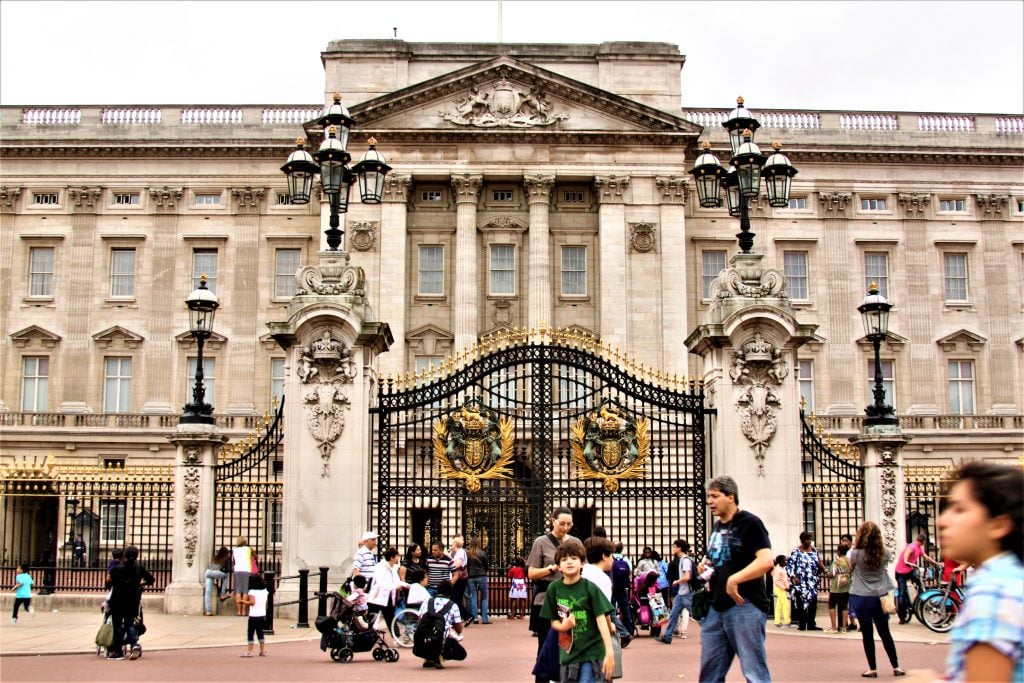
The official London residence of the monarch and one of the most famous landmarks in London.
On first impressions, it looks quite small in comparison to what you might believe a palace should look like, but don’t be fooled, because there are 775 rooms in total. However, Buckingham Palace wasn’t as grand as it is now.
When it was first built, it was known as Buckingham House and was built for the Duke of Buckingham back in 1703. King George III later brought it in 1761.
Since it has been expanded to what we see today and is now fit for a queen or king.
If you’re interested in getting a glimpse into royal life, the State Rooms are open to visitors during the summer months.
Inside, you’ll be dazzled by the grand staircase, before wandering through the picture gallery, the ballrooms, the throne room, and some reception rooms used for official events.
Many of the rooms are still actively used for state occasions, including the ballroom and the throne room.
Once you have finished looking into how the Royals live, head into their spacious garden, where you can enjoy a hot beverage and a slice of cake.
This will pair well with a visit to some of the best parks in London, including St James Park, Green Park and Hyde Park.
To avoid disappointment, book tickets online because they will sell out quickly.
Honestly, if you are royalist like us, then Buckingham Palace is something you can’t miss.

Tower Bridge
Tower Bridge has to be one of the top London attractions to visit, but don’t get confused with London Bridge, as they are both completely different in every way.
For a start, it is further east along the River Thames, and the most distinguishing feature is the two towers and the blue suspension design.
It was built between 1886 and 1894 to help ease traffic across the river and was officially opened by the Prince of Wales in June 1894.
What we learnt as we took the Tower Bridge Exhibition was the amount of effort that went into construction, when they didn’t have modern building technology or techniques.
The experience starts by climbing to the top of the North Tower, where you’ll learn about how the bridge was designed and built.
Once at the top, the highlights are the views across East and West London. The glass walkway gives you direct views down onto the bridge and river below.
If you want a bonus, then check out the website for bridge lifting times, time it so you can be on the glass walkway, as the bridge opens to allow a passing ship through.
What surprised us the most was that when the bridge was built, it would lift at least 30 times a day; now it opens maybe 30 times a month.
The tour doesn’t end there; you’ll descend the South Tower and follow the blue route into the old Victorian Engine Rooms.
It shows how the original machinery used to power the bridge.
Tower Bridge is within proximity to the Tower of London, just a short walk across the bridge to the infamous fortress.
It would be worth combining both on the same day.
This is an ideal spot to visit on a rainy day in London.
Something that we learnt at the exhibition was that the tower is held together by around 13 million steel rivets, which goes to show how much engineering went into building this impressive bridge.
Book your Tower Bridge Experience here.
Tower of London
The Tower of London is one of those places that lives up to the hype and is probably one of the most historic landmarks in London.
It stands proudly on the banks of the River Thames, just a short walk from Tower Bridge. This historic fortress has been standing in the City of London for over 1000 years.
The original structure was built by William the Conqueror in the 1070s and took about 20 years to complete.
It once served as a royal palace and a fortress but has since been a zoo and a prison.
Today, it’s best known to be the home of the Crown Jewels, one of the most valuable collections of the royal family.
This is not just another historic building; everywhere you turn, there’s something to learn. From the famous prisoners that were held here and royal intrigue to dramatic executions.
If you’re visiting London for the first time, you should put this high on your list.
As there is so much to see inside the Tower of London, it’s worth setting aside at least a couple of hours for your visit.
Understandably, the biggest draw is the Crown Jewels, so try to get there early to avoid the crowds.
Because this is one of London’s most popular attractions, queues are often long, especially at weekends and during school holidays. To avoid disappointment, you should book tickets online in advance and arrive soon after it opens.
If you get a chance to join a tour by the Yeoman Warders, then do it. These famous guardians not only live within the walls of the tower but are there to protect it. They’re packed with fascinating stories and often end up being one of the highlights of the visit.
London Eye
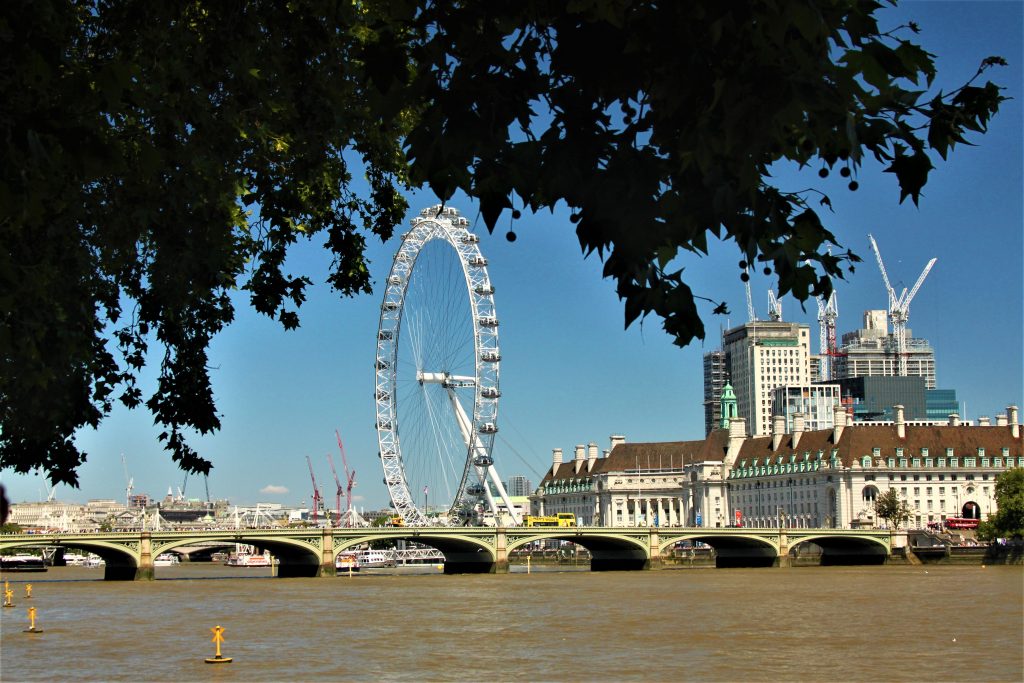
While London offers plenty of historical landmarks, there are also a few that have been built to mark the turn of the millennium, and one of those is the London Eye.
It was built to celebrate the new millennium, and initially intended to be a temporary attraction, known as the Millennium Wheel.
Londoners and visitors alike loved it that much that it became a permanent fixture to the London skyline.
Today, it’s one of the most recognisable landmarks in London and offers some of the best views across the city.
A journey on the London Eye takes around 30 minutes, giving you plenty of time to soak up the 360-degree views. On a clear day, you can see the city’s most famous spots including Big Ben, St Paul’s Cathedral and many more.
What we loved about taking a ride on the London Eye was that it offered a completely different perspective. Instead of seeing the city from street level, you can watch the River Thames weave its way through the heart of the capital.
This is one of the more romantic experiences in London, as you can upgrade to a VIP experience with champagne, or even hire a private capsule if you’re celebrating something special.
Whether you are visiting for the first time or the fifth, the London Eye is one of the attractions that helps you see the city from a different perspective.
St Paul’s Cathedral
St Paul’s Cathedral stands proudly in the heart of the City of London, on top of Ludgate Hill and has dominated the skyline for over 300 years, until taller buildings were built around it.
Sadly, there are no remains of the original cathedral on this site. The initial cathedral was destroyed by the Vikings; another was rebuilt by the Normans, and then the Great Fire of London swept across the city in 1666, destroying much of the building.
The magnificent cathedral that we see today was designed by the famous Sir Christopher Wren, who was tasked with rebuilding one of London’s most important places of worship.
Sir Christopher Wren is famous for the dome that is perched atop, which dominates London and is one of the largest domes in the world.
We first noticed the sheer scale of it from the exterior, but on entry, look out for the intricate ceilings, beautiful stonework and the colourful stained glass windows. It’s very difficult not to stop for a moment and take it all in.
It’s not just a place of worship; it’s also played an important role in 1981, when Lady Diana Spencer and the future King of England, Charles, married, with millions around the world watching.
To get the most out of your visit, you can choose between a guided tour and exploring at your own pace. Either way, we’d recommend allowing plenty of time, as there is far more to see and learn than you might expect.
The highlight is climbing to the upper galleries and dome, where you’ll be rewarded with fantastic views across the City of London.
It is a bit of a workout getting to the top, but it is well worth the effort.
Tickets are available online in advance or on arrival, although it’s always worth checking the cathedral’s website before you visit, as services and special events can affect opening times.
For us, St Paul’s Cathedral is one of those places that perfectly combines London’s history with architecture and culture all rolled into one.

Westminster Abbey
Sitting just a short stroll from Big Ben and the Houses of Parliament, this magnificent church has been at the heart of royal and national events for centuries.
Since William the Conqueror’s coronation back in 1066, every British monarch has been crowned here, making it one of the most important buildings in the country.
However, it is more than just a church in which coronations are held.
Over the years, it hosted 16 royal weddings including Prince William and Catherine Middleton in 2011. It’s also the final resting place of monarchs, scientists, writers, poets, and influential figures.
The abbey that you see today was largely rebuilt by Henry III in the 13th century, although the site’s history stretches as far back as a church founded by Edward the Confessor.
If you’d like to see the remains of the original building, head into the undercroft and Pyx Chamber, where the oldest surviving sections can still be found.
What we learnt on our visit was the fascinating stories and history that’s still evident today.
Stand by the sobering Tomb of the Unknown Soldier, seeing the final resting places of famous historical figures, or looking at the Coronation Chair where monarchs have been crowned for generations.
There was always somewhere that made us stop and take a closer look.
Don’t forget to look up at the intricate vaulted ceiling, detailed stonework, and colourful stained glass windows.
To get the most out of your visit, join a guided tour or explore at your own pace with a multimedia guide, which is available in several languages.
We chose the self-guided option; it was easy to follow, and it allowed us to take it at our own pace. We would pause, take in the monuments that interested us the most, and reflect.
If you get a chance, we’d recommend speaking to the volunteers. They are incredibly knowledgeable and often share fascinating stories that you wouldn’t find in a guidebook.
Westminster Abbey is one of London’s most popular attractions, so it is worth booking tickets in advance, particularly during peak travel periods.
It’s also a good idea to check the abbey website before visiting, as services and special events can affect visitor access.
If you’re interested in royalty or simply seeing one of London’s most iconic buildings, then it’s an experience you won’t want to miss.
London Underground sign
You’ll spot this sign everywhere in the city, and that’s what makes it iconic.
Known as the “roundel”, a simple red circle with a blue bar running through it has become a recognisable symbol of London.
You’ll see this above underground station entrances, on platforms, on maps, and even in souvenir shops across the city.
It might seem like a humble transport logo, but it’s been a part of London’s identity for over 100 years, with its earliest version appearing in 1908.
What makes it stand out is the simplicity of the design. It’s clean, bold, and clearly defines each station, with the name written across the blue bar.
You don’t need to go looking for this icon, as it will find you everywhere you go.
And if you’re one for filling up your Instagram feed, then there are some great spots to capture, including Westminster Station, especially with Big Ben in the background. While South Kensington, Notting Hill Gate and Piccadilly Circus all give you a mix of the roundel and London scenery.
And while you’re taking a photograph of the London Underground Sign, why not use it at the same time? It’s one of the fastest and easiest ways to get around, and once you start to navigate the network a couple of times, you’ll be travelling around London like a pro.
Honestly, once you’ve been in London for a few days, you’ll start to notice it, even without realising it.


Black cabs
Alongside the London Underground roundel and the red double-decker bus, black cabs are just as recognisable. You’ll see them everywhere.
What makes the London black cab so different from the ordinary taxi is that the driver must pass the famously difficult test called The Knowledge.
The test requires them to memorise thousands of streets, landmarks, and routes across London. It is known as one of the toughest taxi qualifications and can take several years to complete.
While most of us rely on a satnav to get us around, these black cab drivers know every route possible in London.
Now, we’ll be honest here, black cabs aren’t the cheapest mode of transport in London. But if you’ve never travelled one before, we’d say it’s worth doing it just once.
Even a short journey will give you a taste of experiencing a piece of London’s culture; that’s been a part of the city for generations.
As a female travel couple, travelling in a black cab at night gave us a bit of reassurance, as drivers are licensed by Transport for London.
And as a local, we’ve only used black cabs occasionally, but still a different way of getting around.
Red double-decker buses
When most people picture London, a red double-decker bus is probably not the first image that comes to mind.
However, they are as much a part of the city’s identity as Big Ben and The Tower of London and are one of the best ways to see London.
The London buses go back further than you probably realise.
Long before the red buses appeared, London’s first public transport consisted of horse-drawn carriages known as omnibuses.
The first omnibus carried passengers from Paddington Green and Bank in the early 19th century.
As technology evolved, so did the London transport network, with the introduction of petrol-powered buses, and they replaced horse-drawn carriages by 1914.
Today, most of the buses are electric-powered and are one of the largest in the world, connecting almost every corner of the city.
What we love about travelling via bus is that you actually see more of London, as opposed to travelling underground.
Bag a seat at the front row at the top deck and take in the views of the streets, architecture and landmarks as you go.
There are a few fabulous routes on the bus that will take you past the iconic landmarks of London.
The hop-on, hop-off sightseeing bus is popular with visitors. As it says on the tin, you hop on the bus. There are three different routes, and then you hop off at a stop for some sightseeing, before you hop back on to another destination.
A more affordable experience to consider is the heritage routes, such as number 15 or number 9.
Route 15 passes several famous landmarks, including the Tower of London, St Paul’s Cathedral, the Strand and Trafalgar Square, while route 9 takes you through parts of the West End towards Kensington.
For first-time visitors, this could be your best sightseeing tour, as you relax and watch London pass by and hop off whenever something catches your eye.
Red telephone boxes
There are a few London icons more photographed than the famous red telephone boxes.
Even though the phones inside are no longer used, they remain one of the most recognisable symbols of London and Britain.
The red telephone boxes date back to as early as the 20th century. In 1924, an architect by the name of Sir Giles Gilbert Scott won a competition to design a new style kiosk that became a familiar sight across London.
For many people, it brings back memories of very different times when mobile phones were not part of everyday life.
Not every household had a telephone line. Public telephone boxes were a way to stay in touch with friends and family.
You’d feed coins into the machine and hope that you’d have enough change to finish the conversation.
As technologies evolved, mobile phones became widespread, and the need for a public telephone declined.
Some red phone boxes have been removed, while others have survived and found new purposes. Some have been transformed into miniature libraries and art galleries, while others remain historical landmarks.
They’re quirky, Instagram worthy and become part of London’s character.
These red telephone boxes might have lost their use over time, but they are a reminder of how London and technology have changed.
Conclusion
London really has no shortage of things to do, but with limited time and if this is your first visit, you’ll want to pick the famous sights that offer a mix of history, culture, and the most unforgettable spots.
From The Tower of London and Westminster Abbey to more modern structures such as the London Eye, these are the iconic London landmarks that genuinely help you experience the best of the city.
If we were to visit London as first-time visitors, we would build our trip around the landmarks that interest us the most. We then layer everything else around them, such as cafes, hidden streets, markets, and river walks. It turns it around from a list of things to see and do, to an actual experience, that’s organised.
Come and join us over on Facebook, where you can ask any questions you have about visiting London and the UK. We pop in there every day and answer any questions you might have.
Continue your travel planning, with these useful posts:
- Westend Shows you must see in London
- How to get around the UK
- Cost of travelling to the UK
- Best time to visit the UK
- How to navigate the London Underground like a pro
- Where to stay in London
- Essential tips for visiting the United Kingdom
- A day trip to Brighton from London
- Essential guide to hiking the Seven Sisters
- Best places to visit in the UK